MAGnituDe has just launched its country-specific policy reports – covering Germany, Finland, Latvia, Lithuania, Poland, and Sweden – focusing on labour market, education, and housing, complemented by a comparative analysis. Together, they form the empirical basis for detecting the impact of affect in the geopolitics of the Baltic Sea region: a region profoundly shaped by the mobilities of FDPs from Ukraine since 2022.
Classical geopolitics frames the consequences of Russia’s war on Ukraine in terms of hybrid threats – suspected Russian sabotage of undersea cables and pipelines, GPS jamming, and the military build-up along NATO’s eastern flank. But what about the millions of people who have sought shelter in neighbouring countries? What impact do they have on these societies, their democratic systems and how they position themselves in this conflict?
This rather different angle on geopolitics – less concerned with the power politics of governments than with the responsiveness of civil society – opens up a vital perspective on phenomena that simultaneously polarise and mobilise compassion and hostility. It also tells us something about how countries in the region see themselves as democracies. The Scandinavian self-image of openness and generosity does not always match what Ukrainians encounter on the ground. In the southern Baltic, responses still carry traces of Cold War-era divisions. And along the EU’s external border with Russia, solidarity is pragmatic and personal — shaped by the awareness that a comparable fate could one day be one’s own.
The key for analysing affect in geopolitics, then, is to engage directly with major actors and stakeholders – including FDPs themselves – to trace their interactions within each national context, and to interview civil society organisations (CSOs) as well as FDPs about how they perceive their position in the core domains of subsistence: labour, education, and housing. On one side lies the truth of the systems, expressed in how they provide for Ukrainian FDPs; on the other lies the lived experience of the FDPs themselves, and how they feel within these systems. Is the country a welcoming host? Is the displaced person a grateful guest? Or is the guest, in fact, something more—a valuable citizen? What did the Temporary Protection Directive (TPD) make possible, and what did Ukrainians actually make of it?
The limitations imposed by the respective national residence status constrain refugees’ opportunities for participation, even though the TPD was meant to grant Ukrainians straightforward, EU-wide access to the labour market and social benefits from the very outset. Has this worked across borders, or do experiences shift the moment one crosses from one country to the next?
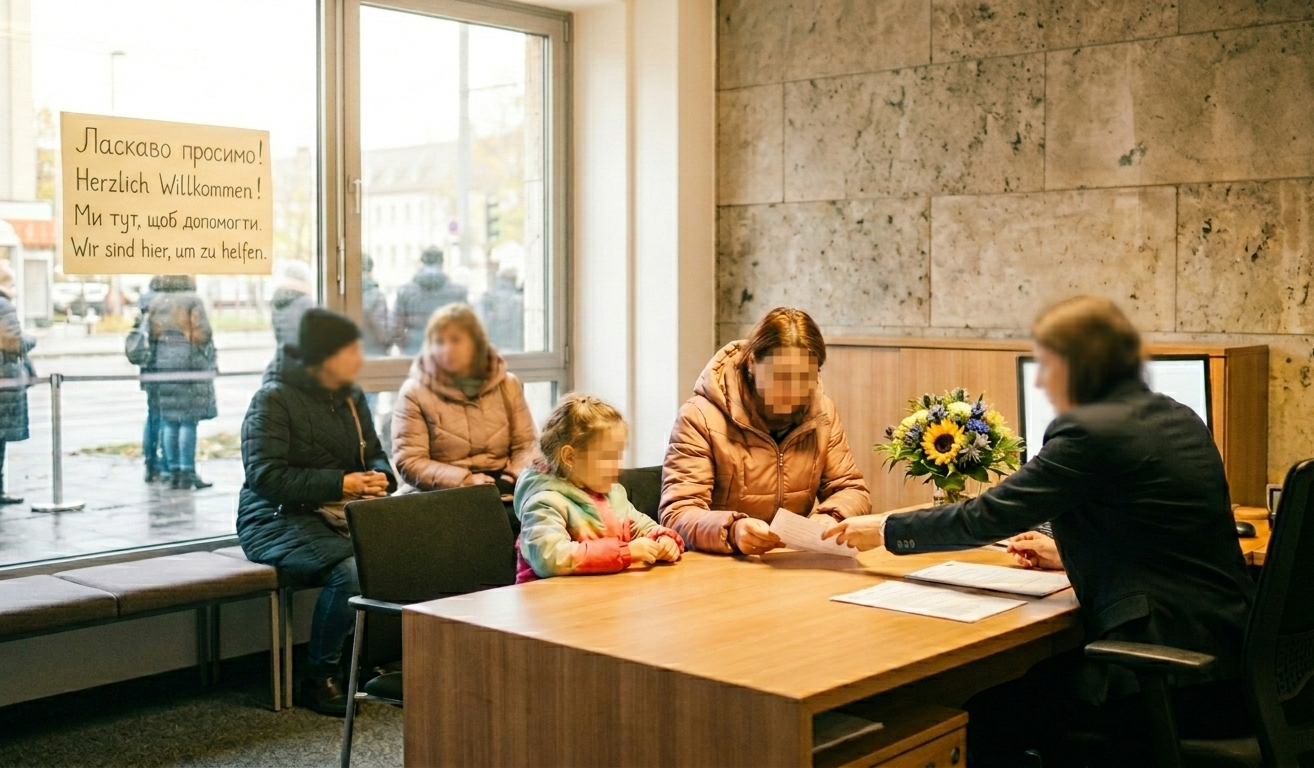
It is also a question of expectations and experiences on both sides of the desk, which together shape coexistence with – and the acceptance of – FDPs in their host societies. Here affect becomes tangible in everyday interaction: not private emotion alone, but the atmosphere of an encounter at the housing office, the tone of a conversation at the school gate, the quiet calculation behind an officers “yes” or “no.” Affect travels through institutions and shapes them – these are the textures geopolitics usually overlooks.
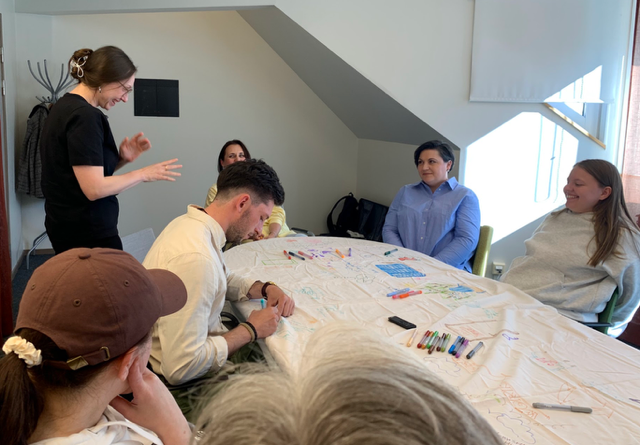
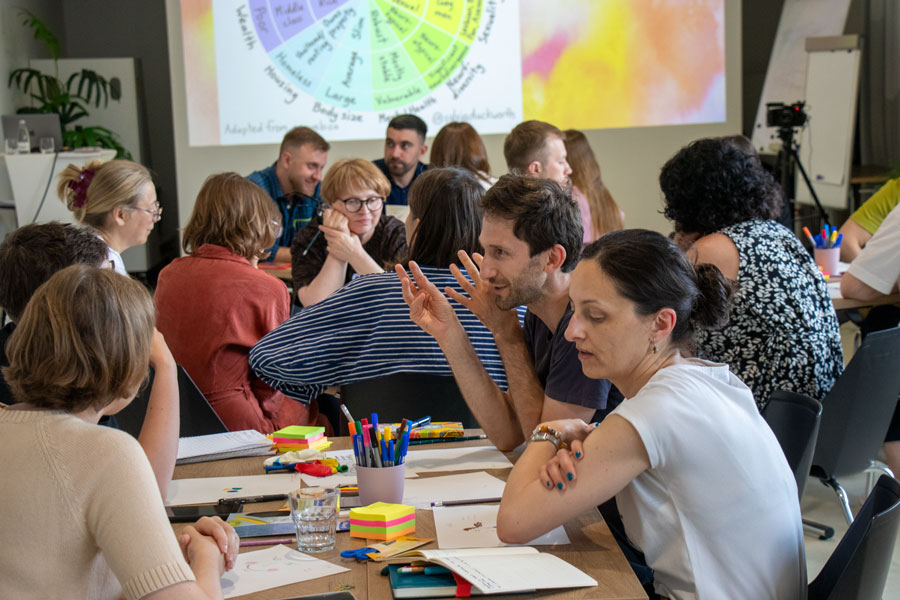
The country reports provide the foundation for these questions, revealing the strikingly different ways in which governmental and civil support structures operate across the Baltic Sea region. Yet, as is so often the case, statistics, regulations, and public discourse can offer only a partial view – one that risks excluding individual experience and perception, and thus delivering an incomplete picture. The second step, therefore, consists of interviews conducted under very particular conditions, following a newly developed SensArticulate-approach, a method designed to capture how people articulate their sensory and emotional experience of displacement. Approach and the findings will be the subject of our next blog post. One thing, however, can already be said: One EU directive does not a coherent response make.